This course is already changing leaders inside 2 post-graduate degrees.
If you are ready to go deeper, it starts here - £999
This course is already changing leaders inside 2 post-graduate degrees.
If you are ready to go deeper, it starts here - £999
This course is already changing leaders
inside 2 post-graduate degrees.
If you are ready to go deeper,
it starts here - £999

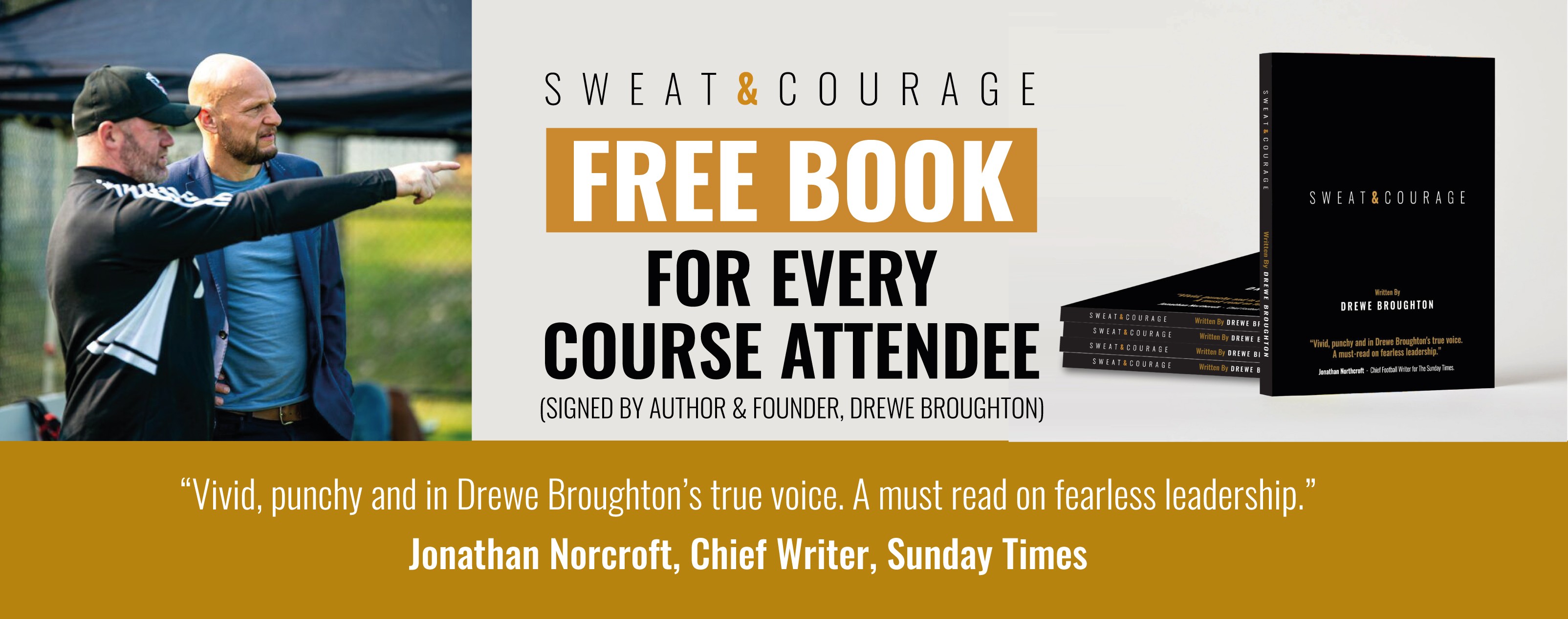
Leadership is lonely and demands self knowing. In my vast experience of working with leaders at the top of their game it’s a necessity that they become and remain connected to who they are in order to connect with those they lead, when disconnection happens results suffer.
WHAT IS IT:
- 8 x weekly 90 minute group zoom calls
- (Mondays 20.00hrs - 21.30hrs UK )
- Weekly prep
- Course pack sent out
- WhatsApp group throughout the 8 weeks
- Optional follow on support
SIGN UP NOW >>>
WHEN IS IT:
Monday March 9th - Monday 4th May 2026
or
Monday September 7th - Monday October 26th 2026
WHEN IS IT:
Monday March 9th - Monday 4th May 2026
or
Monday September 7th - Monday October 26th 2026
WHEN IS IT:
Monday March 9th - Monday 4th May 2026
or
Monday September 7th - Monday October 26th 2026
WHEN IS IT:
Monday March 9th - Monday 4th May 2026
or
Monday September 7th - Monday October 26th 2026
WHO IS IT FOR:
- Founders & execs who feel the edge approaching
- Leaders who have “succeeded” but feel disconnected
- Coaches, culture drivers, and decision-makers
- Men tired of performing and ready to feel
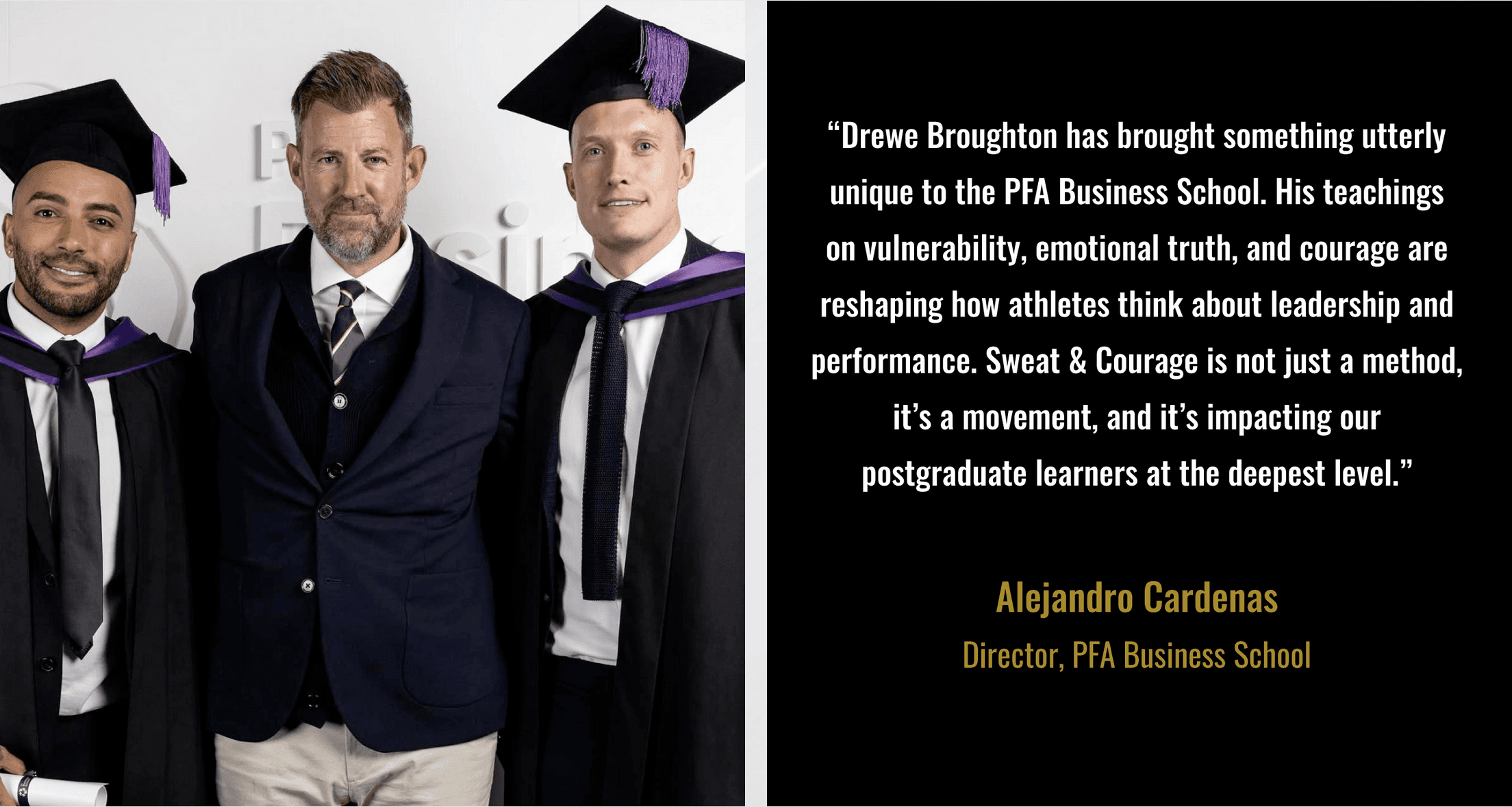
This course forms the foundation of two UK postgraduate degrees in leadership and emotional intelligence. It is grounded in the VASC method and has been delivered to elite performers globally.
WHO IS IT FOR:
- Founders & execs who feel the edge approaching
- Leaders who have “succeeded” but feel disconnected
- Coaches, culture drivers, and decision-makers
- Men tired of performing and ready to feel
This course forms the foundation of two UK postgraduate degrees in leadership and emotional intelligence. It is grounded in the VASC method and has been delivered to elite performers globally.
MODULE BREAKDOWN
Week 1. Fear & Control
This week we explore how unconscious fear quietly drives so many leaders into patterns of over-control. In a world obsessed with “marginal gains,” we’ll pull apart the difference between genuine high performance and fear disguised as discipline. Many leaders pride themselves on relentless preparation, but beneath it sits a deep fear of failure. That fear breeds rigidity, obsession, and micromanagement. And when control takes over, creativity dies, spontaneity disappears, and environments become tight, anxious, and fragile.
This week is about naming that fear, loosening that grip, and rediscovering the strength that comes from trust, presence, and emotional courage.
⸻
Week 2. Ego – The Silent Armour
This week we uncover how fear, when left unspoken, grows into ego. Ego becomes the armour we build to protect ourselves the image, the identity, the performance mask. We’ll separate ego from true self, and dismantle the tired myth that “every top performer needs a big ego.” They don’t. They need grounding, truth, and inner stability.
We’ll explore how ego isn’t competitiveness , it’s insecurity dressed up as strength. We’ll look at why the biggest competitors often carry the biggest potential egos, and how that creates tension, isolation, fragile leadership, and emotional volatility.
This week is about understanding ego deeply, loosening its grip, and moving from pride to presence from defending yourself to actually leading.
⸻
Week 3. Vulnerability vs Invincibility
This week we confront a hard truth: human beings are not invincible. We are exposed, fragile, emotional, and deeply human and that is not weakness, it’s the gateway to real strength. We explore how ego tries to create an illusion of invincibility, and how that façade silently crushes creativity, trust, and freedom.
Here we turn toward the self: honest, grounded, unarmoured. We look at how the world’s highest performers speak openly about vulnerability as the foundation of courage, connection, and sustainable excellence. And we’ll draw a crucial distinction vulnerability is not oversharing, drama, or emotional dumping. It is the brave ability to tell the truth, to stop pretending, and to lead as a whole human being.
This is where performance stops being clenched and fearful… and becomes alive, authentic, and real.
⸻
Week 4. Perfectionism V Healthy Striving
This week we explore the difference between true pursuit of excellence and the prison of perfectionism. Perfectionism is rarely about standards : it’s about shame. At some point, many high performers became separated from themselves. They stopped trusting their instincts, stopped feeling safe simply being who they are, and began chasing worth through flawless performance. “If I’m perfect, I’ll be enough.” That belief silently runs millions of lives.
We’ll dig into how shame fuels this cycle and how perfectionism creates tension, anxiety, self-criticism, and an inability to enjoy anything achieved. Then we contrast that with healthy striving being all-in, fully prepared, disciplined, committed, and giving everything of yourself… but with a softer grip. With humanity. With acceptance that you are not perfect, and you don’t need to be.
This is deep work. It restores instinct, joy, and trust in self. And it begins with understanding that perfectionism isn’t strength it’s fear dressed as excellence.
We we will look at the key differences in YOU are and I am
⸻
Week 5. Trust, Belief & The Imposter
We reach the halfway point, and now the rebuilding begins. This week is about restoring trust in ourselves understanding what genuine self-belief actually is, how it is formed, and what it means to stand inside it rather than perform it. We’ll unpack the idea of “imposter syndrome,” a phrase thrown around so often yet rarely understood. By this stage, we’ll clearly see how the imposter grows from perfectionism, shame, fear, and the belief that who we are is never quite enough.
Now we start to reclaim something deeper. We examine where belief truly lives, not in bravado or noise, but in quiet certainty and alignment with self. We explore how to rebuild trust in our instincts, our story, our resilience, and our humanity. This week is about meeting the imposter honestly, understanding its origins, and then choosing not to live from it anymore.
Here, belief stops being an act… and becomes a grounded, lived reality.
⸻
Week 6. Authenticity – Who Am I?
This week we begin the most powerful work of all coming home to who we truly are. Authenticity isn’t performance, branding, or image. It is the raw, grounded state of being aligned with yourself. When authenticity is present, energy shifts, rooms change, and people feel something real. That’s leadership at the highest emotional level.
We’ll explore what it truly means to live from the I Am, not the role, not the mask, not the identity built for survival, but the deeper self beneath it. Through powerful reflections and real-world examples, we’ll examine why authenticity is far stronger than approval, far stronger than image, and why it creates connection, trust, and authority without force.
This week is about clarity, alignment, and courage. It asks a simple but life-changing question:
Who am I… when I stop pretending? And am I ready to have the courage to be seen?
⸻
Week 7. Empathy: In Feelings
This week we discover why empathy is the most powerful tool in leadership and why it has taken seven weeks to get here. From the Greek em–pathos meaning “in feelings,” empathy isn’t simply about understanding others. At its core, it is about understanding ourselves. Everything we have explored up to this point: fear, ego, vulnerability, perfectionism, belief, authenticity has been preparing us for this level of connection.
Now that we know ourselves more deeply, we can finally meet others with truth, presence, and compassion. Real empathy is not softness. It is strength. It allows leaders to see clearly without losing standards, to connect deeply without losing authority, and to build environments where people feel safe, trusted and inspired to give their best.
This is where leadership becomes deeply human. This is where connection stops being theory… and becomes lived reality.
⸻
Week 8. Sweat & Courage
Now we bring it all together. This final week is about understanding the full power of the VASC Method: Vulnerability, Acceptance, Sweat & Courage and why it sits at the heart of elite leadership and human performance.
We start with vulnerability: the willingness to be seen, to stop pretending, to risk truth. As Brené Brown reminds us, vulnerability is the greatest measure of courage. There is no courage without it.
Then we step into acceptance. Not resignation. Not passivity. Acceptance is strength. It is the clarity to see life, pressure, fear, uncertainty, and ourselves exactly as they are without denial, without fantasy and still choose to walk forward. Acceptance creates emotional stability. It stops control, panic, and perfectionism owning us. It gives us grounding.
From there comes sweat the daily work, discipline, consistency and effort that performance truly requires. Because nothing changes without action. Nothing grows without labour. Sweat is commitment embodied.
And finally, courage. Courage is walking forward anyway. Courage is leading when it hurts. Courage is holding standards when it would be easier to soften. Courage is choosing truth, choosing responsibility, choosing growth… again and again.
By Week Eight we understand something deeply:
This isn’t theory.
This is a way to live.
Now you know who you are.
Now you understand what drives you.
Now you have the emotional tools.
From here on, leadership becomes a daily act of Vulnerability, Acceptance, Sweat… and Courage.
TESTIMONIALS
MODULE BREAKDOWN
Week 1. Fear & Control
This week we explore how unconscious fear quietly drives so many leaders into patterns of over-control. In a world obsessed with “marginal gains,” we’ll pull apart the difference between genuine high performance and fear disguised as discipline. Many leaders pride themselves on relentless preparation, but beneath it sits a deep fear of failure. That fear breeds rigidity, obsession, and micromanagement. And when control takes over, creativity dies, spontaneity disappears, and environments become tight, anxious, and fragile.
This week is about naming that fear, loosening that grip, and rediscovering the strength that comes from trust, presence, and emotional courage.
⸻
Week 2. Ego – The Silent Armour
This week we uncover how fear, when left unspoken, grows into ego. Ego becomes the armour we build to protect ourselves the image, the identity, the performance mask. We’ll separate ego from true self, and dismantle the tired myth that “every top performer needs a big ego.” They don’t. They need grounding, truth, and inner stability.
We’ll explore how ego isn’t competitiveness , it’s insecurity dressed up as strength. We’ll look at why the biggest competitors often carry the biggest potential egos, and how that creates tension, isolation, fragile leadership, and emotional volatility.
This week is about understanding ego deeply, loosening its grip, and moving from pride to presence from defending yourself to actually leading.
⸻
Week 3. Vulnerability vs Invincibility
This week we confront a hard truth: human beings are not invincible. We are exposed, fragile, emotional, and deeply human and that is not weakness, it’s the gateway to real strength. We explore how ego tries to create an illusion of invincibility, and how that façade silently crushes creativity, trust, and freedom.
Here we turn toward the self: honest, grounded, unarmoured. We look at how the world’s highest performers speak openly about vulnerability as the foundation of courage, connection, and sustainable excellence. And we’ll draw a crucial distinction vulnerability is not oversharing, drama, or emotional dumping. It is the brave ability to tell the truth, to stop pretending, and to lead as a whole human being.
This is where performance stops being clenched and fearful… and becomes alive, authentic, and real.
⸻
Week 4. Perfectionism V Healthy Striving
This week we explore the difference between true pursuit of excellence and the prison of perfectionism. Perfectionism is rarely about standards : it’s about shame. At some point, many high performers became separated from themselves. They stopped trusting their instincts, stopped feeling safe simply being who they are, and began chasing worth through flawless performance. “If I’m perfect, I’ll be enough.” That belief silently runs millions of lives.
We’ll dig into how shame fuels this cycle and how perfectionism creates tension, anxiety, self-criticism, and an inability to enjoy anything achieved. Then we contrast that with healthy striving being all-in, fully prepared, disciplined, committed, and giving everything of yourself… but with a softer grip. With humanity. With acceptance that you are not perfect, and you don’t need to be.
This is deep work. It restores instinct, joy, and trust in self. And it begins with understanding that perfectionism isn’t strength it’s fear dressed as excellence.
We we will look at the key differences in YOU are and I am
⸻
Week 5. Trust, Belief & The Imposter
We reach the halfway point, and now the rebuilding begins. This week is about restoring trust in ourselves understanding what genuine self-belief actually is, how it is formed, and what it means to stand inside it rather than perform it. We’ll unpack the idea of “imposter syndrome,” a phrase thrown around so often yet rarely understood. By this stage, we’ll clearly see how the imposter grows from perfectionism, shame, fear, and the belief that who we are is never quite enough.
Now we start to reclaim something deeper. We examine where belief truly lives, not in bravado or noise, but in quiet certainty and alignment with self. We explore how to rebuild trust in our instincts, our story, our resilience, and our humanity. This week is about meeting the imposter honestly, understanding its origins, and then choosing not to live from it anymore.
Here, belief stops being an act… and becomes a grounded, lived reality.
⸻
Week 6. Authenticity – Who Am I?
This week we begin the most powerful work of all coming home to who we truly are. Authenticity isn’t performance, branding, or image. It is the raw, grounded state of being aligned with yourself. When authenticity is present, energy shifts, rooms change, and people feel something real. That’s leadership at the highest emotional level.
We’ll explore what it truly means to live from the I Am, not the role, not the mask, not the identity built for survival, but the deeper self beneath it. Through powerful reflections and real-world examples, we’ll examine why authenticity is far stronger than approval, far stronger than image, and why it creates connection, trust, and authority without force.
This week is about clarity, alignment, and courage. It asks a simple but life-changing question:
Who am I… when I stop pretending? And am I ready to have the courage to be seen?
⸻
Week 7. Empathy: In Feelings
This week we discover why empathy is the most powerful tool in leadership and why it has taken seven weeks to get here. From the Greek em–pathos meaning “in feelings,” empathy isn’t simply about understanding others. At its core, it is about understanding ourselves. Everything we have explored up to this point: fear, ego, vulnerability, perfectionism, belief, authenticity has been preparing us for this level of connection.
Now that we know ourselves more deeply, we can finally meet others with truth, presence, and compassion. Real empathy is not softness. It is strength. It allows leaders to see clearly without losing standards, to connect deeply without losing authority, and to build environments where people feel safe, trusted and inspired to give their best.
This is where leadership becomes deeply human. This is where connection stops being theory… and becomes lived reality.
⸻
Week 8. Sweat & Courage
Now we bring it all together. This final week is about understanding the full power of the VASC Method: Vulnerability, Acceptance, Sweat & Courage and why it sits at the heart of elite leadership and human performance.
We start with vulnerability: the willingness to be seen, to stop pretending, to risk truth. As Brené Brown reminds us, vulnerability is the greatest measure of courage. There is no courage without it.
Then we step into acceptance. Not resignation. Not passivity. Acceptance is strength. It is the clarity to see life, pressure, fear, uncertainty, and ourselves exactly as they are without denial, without fantasy and still choose to walk forward. Acceptance creates emotional stability. It stops control, panic, and perfectionism owning us. It gives us grounding.
From there comes sweat the daily work, discipline, consistency and effort that performance truly requires. Because nothing changes without action. Nothing grows without labour. Sweat is commitment embodied.
And finally, courage. Courage is walking forward anyway. Courage is leading when it hurts. Courage is holding standards when it would be easier to soften. Courage is choosing truth, choosing responsibility, choosing growth… again and again.
By Week Eight we understand something deeply:
This isn’t theory.
This is a way to live.
Now you know who you are.
Now you understand what drives you.
Now you have the emotional tools.
From here on, leadership becomes a daily act of Vulnerability, Acceptance, Sweat… and Courage.
TESTIMONIALS
INVESTMENT:
£999 one off payment
or
£1150 in installments (across 3 months)
SIGN UP NOW >>>
INVESTMENT:
£999 one off payment
or
£1150 in installments (across 3 months)
INVESTMENT:
£999 one off payment
or
£1150 in installments (across 3 months)
SIGN UP NOW >>>